
For quite some time now, we have been bombarded with alarming reports about the decline of bees and the consequences this has for humanity. Our very survival would in fact depend on it, because: without bees there is no pollination of fruits and vegetables, no pollination of crops used as animal feed, and thus even the supply of animal-based food for humans is put at risk…

Why are bees so important for our world?
If you ask that question specifically about honeybees, the focus is usually only on the honey they produce. But from a purely social and economic perspective, the main answer is pollination; not only by honeybees, but also by solitary bees, bumblebees, and other flying insects.
Is there a difference between honeybees and wild bees?
Within the insect world, when it comes to pollination, we can limit ourselves to flying insects, the most well-known of which are bees, bumblebees, and wasps. Strictly speaking, bees and bumblebees belong to the same genus, while wasps belong to another. Within the group of bees and bumblebees, we make an ‘artificial’ distinction between solitary insects and those living in groups. Because honeybees are able to cooperate extremely well, they are naturally of the greatest importance for pollination when it comes to results, that is, for the fertilization of crops.
In a large rapeseed field or a big orchard, honeybees will first send out their scouts, after which the entire colony becomes perfectly organized within the hour to pollinate the blossoms of the rapeseed as efficiently as possible (and of course to collect honey). Solitary bees will also visit that field and orchard, but without any contact with their neighbors, and therefore they will not be present there in their thousands. Yet solitary bees are of inestimable value for native plants, because some are even very ‘species-specific’, meaning that one bee species will pollinate a particular plant and no other. Solitary bees are content if their small supply of honey suffices for reproduction, whereas honeybees are not interested in that—they seek only the ‘big gain’ from the ‘mass production’ we offer them. Solitary bees are of the utmost importance for ecology in general, for the survival of nature itself. Bumblebees are active on wild plants such as balsam, comfrey, but also on tomatoes, courgettes, and pumpkins. In general, they are of less economic importance, not least because they are so heavy and cannot always reach the nectar.
Wasps tell a different story: at the beginning of the season, their larvae are raised with animal proteins, from caterpillars, bee larvae, and so on. The sweet secretion of those wasp larvae serves as food for the older wasps; therefore, they do not collect nectar from flowers. At the end of the season, when there are no more larvae, they look for their “sweetness” in alternative sources, including some nectar from flowers, but especially in obvious sweet things left behind by humans… It is only during that period (August/September) that wasps become hungry and can sometimes be aggressive. Bees—both honeybees and solitary bees—are NOT aggressive, and will never sting unless you step on them or trap them in some way. Solitary wasps (such as sawflies, digger wasps, etc.) are also ecologically very important, because they are species-specific and often depend on a particular plant species.
What do bees look for in flowers?
Pollen, also called pollen grains, contains a lot of proteins and is, for bees and many other insects, the source of essential nutrients. A sufficiently varied supply ensures that bees remain healthy.
Nectar is an energy source for many insects to be able to fly. Bees collect floral nectar and process it into honey: they enrich the nectar with enzymes, remove the excess water, and store the resulting honey in the combs, where it then serves as food for the larvae and also for the bees themselves.

What are the biggest threats to bees?
The biggest problem for bees and also for other insects is the total degeneration of the species, both of honeybees and wild bees. What are the causes of this?
- of extensive breeding/inbreeding of bee breeds by humans, where more attention was paid to productivity (producing as much honey as possible), at the expense of the health of the breed,
- the decline of the food supply; for example, maize has a lot of pollen, but there are still questions about the manipulation and selection of maize seeds... and mono-cultures are not good for the bees in any case;
- valuable plant communities are disappearing due to urbanisation, the construction of roads,…
- the emergence of diseases and pests, which may have always been latent in the populations, but now, due to the slow degeneration and weakening of the race, break out, with very serious consequences; the most well-known is the Varroa mite, which has caused entire bee colonies to weaken and even die;
- Exotic plants are gaining popularity, and they are not always original plants from exotic places grown from seed, but often hybrids and extensively cultivated cultivars, from which insects can no longer derive anything. On the other hand, some imported exotics that are now seen everywhere in nature, and are often considered 'invasive', are not always the culprits they are portrayed to be: for example, giant balsam is not native, but has proven to be very valuable for bees, as well as for bumblebees; the acacia is also not native but is still a great source of nectar, and there are many others like this...
- perhaps the most important cause is: the excessive use of pesticides, in agriculture, but also in gardens; we apparently cannot bring ourselves to completely ban the use of those neonicotinoids (Roundup & Co) even though the harmful effects have been sufficiently proven. Moreover, there is another severely underestimated consequence of excessive pesticide use: the bird population is also declining! Just think of all the insect-eaters that are poisoned by the caterpillars of the Box Moth when they are killed by the 'classic' pesticides.
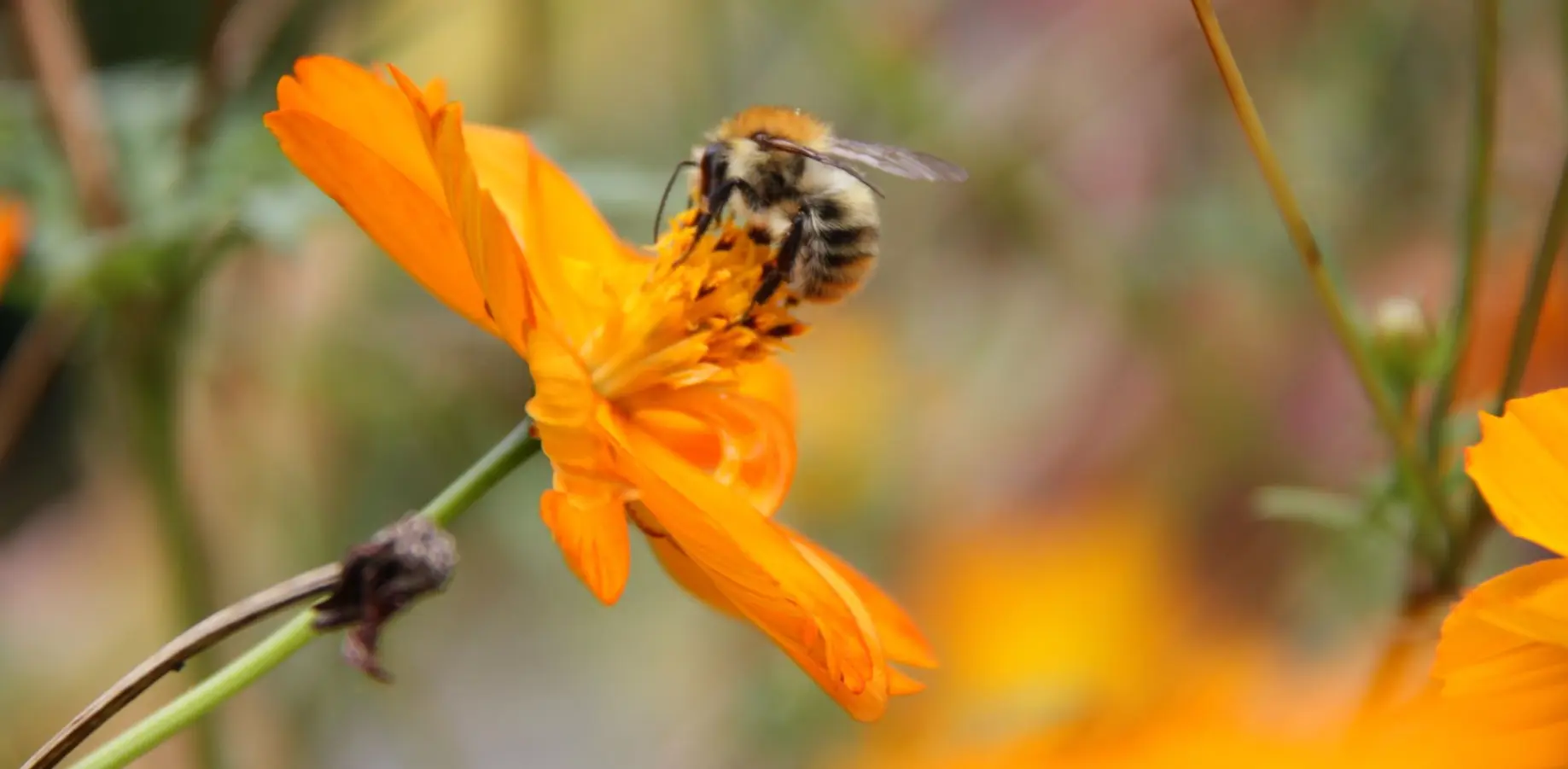
What can we do in our own garden to help the bees and ensure their survival?
- don't be too tidy: a lawn with clover provides an incredible amount of nectar for the bees; therefore, it is not necessary to combat those clovers, and other flowers in the lawn, with chemical means;
- Weeds can be a great resource for bees and bumblebees: besides providing nesting opportunities for some, they gather a lot of pollen and nectar from flowering grasses and weeds. Apart from the troublesome bindweed, horsetail, and couch grass, you should let the 'weeds' have their way here and there in the garden;
- various trees, shrubs and perennial plants (including bulbous plants!) can provide a food source for all bees and bumblebees;
- TREES:
- There are more trees than thought that are fantastic nectar plants, for example Acer campestre, the Field Maple, which not only produces very good honey but also proves to be a very beautiful hedge plant; the well-known Lime, Tilia, and Gleditsia triacanthos, the false Christ thorn, are visited in spring by masses of bees; the latter also attracts whole groups of Long-tailed Tits in late summer, which are fond of the seeds. And so there are many more trees, whether native or not, that are valuable in any garden;
- SHRUBS
- Buddleia, the butterfly bush, Corylus avellana, the hazel, Clematis, Hydrangea paniculata, Rosa rugosa, and many other shrubs are traditionally widely planted, attractive for the pollen and nectar they provide over a long season.
- PERENNIALS
- The list of perennial plants that attract bees and bumblebees is endless: Aster, Astrantia, Bergenia, Campanula, Cirsium (thistle), Leucanthemum (daisy), Echinacea, Salvia, Nepeta, Sedum, and many others attract a great number of pollinating insects during their flowering. Native and local plant material is the most suitable for insects and birds. However, cultivars or selections of, for example, perennials or annuals can also be valuable, provided that you allow as few hybrid species or in vitro cultivated plants as possible. Additionally, plants with very double and filled flowers are actually worthless: bees and bumblebees find it difficult to access nectar and pollen in the heart of the flower;
- Besides wild plants to provide pollinators with an ideal habitat, you can also, and not least for your own enjoyment, choose to sow or plant ANNUALS. These are all plants that belong to the native flora in their country of origin. By annuals, we do not mean the brightly coloured, usually hybrid varieties of Busy Lizzies, Marigolds, Begonias, etc., which are abundantly found in garden centres in spring, but the annuals that you can grow yourself from seed. An additional benefit of flowering annuals: they provide the much-needed nectar/energy during certain periods of the year when there are fewer nutrients available (August, September, ...).
Almost all annuals belong in the list, but if it's difficult to choose, then just sow a wildflower meadow! Besides wildflower meadows with native plants, adapted to the soil and the situation in your garden, which are of course ideal for natural life, you can also opt for wildflower meadows with exotic plants. These are usually very prolific and self-seed well, but never too much. The buzzing of the thousands of bees at such a grand feast is the best reward for your efforts….
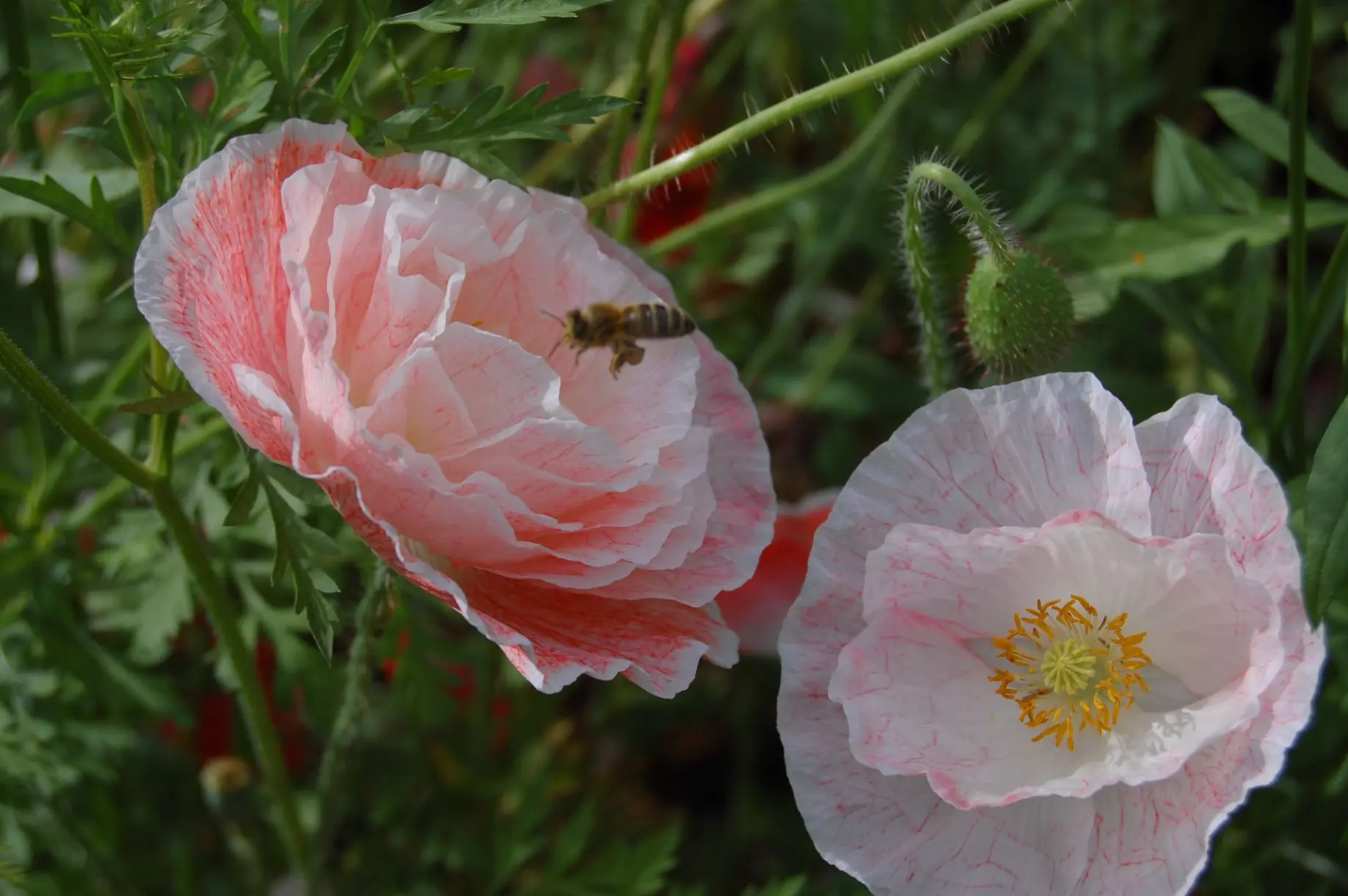
in our assortment
discover here which nectar-friendly flowers we offer